

Policy Report #143 · By Dr. Robert Goldberg
Contents
- Executive Summary
- Silicone Breast Implants
- The Home HIV Test
- Squelching “Off-Label” Drug Uses
- Conclusion
- Introduction
- Silicone Breast Implants
- Junk Science and Kessler’s Ban on Implants
- The Kessler Decision
- What Does Science Say?
- The Home HIV Test
- Who Could Be Against Home Testing?
- David Kessler and America’s Drug Lag
- Squelching “Off-Label” Uses—The FDA’s “Hidden” Drug Lag
- The FDA and Aspirin
- FDA: Choking the Flow of Information
- Off-Label Risk vs. Public Risk
- Where’s the Danger?
- Kessler’s Smokescreens
- How the Ban on Off-Label Promotion Undermines Safety
- Is Off-Label Promotion Necessary for Good Medical Practice?
- Restricting Information Hurts Patients
- Conclusion
- Endnotes
- About The Author
- About IPI
- IPI Publications
- Original Publication Information
Executive Summary
Dr. David Kessler may no longer head the Food and Drug Administration (FDA), but his legacy lives on in the form of a new FDA made in his image. The new modus operandi of the Kesslerized-FDA resulted in these and other abrogations of the FDA's mission.
Silicone Breast Implants
Kessler banned silicone breast implants in the absence of any scientific proof. The trigger was a state court jury awarding a woman $7.3 million, despite the fact that the plaintiff’s physician testified she had autoimmune-like symptoms before receiving implants.
The most recent epidemiological study on the connection between silicone breast implants and autoimmune conditions covered 395,543 female health professionals. It showed that the relative risk of connective-tissue disease among those who have breast implants is only .124 percent higher than those who do not. Despite this evidence, the FDA has refused women the right to decide whether or not to have silicone implants, and has cast a shadow over ALL silicone medical devices.
The Home HIV Test
In 1990, a subsidiary of Johnson and Johnson began development of a home test for HIV. It would allow people to safely extract blood, place the sample on sanitary absorbent paper, send it to a lab, and obtain the results over the phone. It costs $38 dollars compared to $300 at clinics. Its safety and reliability had been acknowledged by the FDA. Yet, the FDA refused to allow it on the market for over five years.
This test was considered a threat by HIV activists and HIV clinics. Even more disturbing, a memo from the Centers for Disease Control (CDC) to the FDA demonstrates that CDC lobbied against approval of the test because it would lead to “HIV positive individuals flooding public health clinics.”
In short, the FDA simply ignored science and gave a set of interest groups and agencies what they wanted, and 10,000 more people contracted AIDS because of a lack of knowledge.
Squelching “Off-Label” Drug Uses
The FDA would prefer that doctors only prescribe drugs for the purposes specifically listed on the label that are approved by the FDA, and avoid uses not approved by the FDA. This is commonly known as “off-label” use.
For instance, if people do not know that aspirin can prevent heart attacks, they may thank the FDA and David Kessler. In 1988, after scientists discovered the connection, aspirin makers wanted to publicize it. In 1989, the FDA called them in and told them they couldn’t advertise the good news because the agency hadn’t approved aspirin as a preventive heart medicine.
As a result, the British Journal of Medicine estimates that 10,000 Americans die each year because they don’t know about aspirin’s value in reducing the incidence of heart attacks.
Conclusion
The FDA’s misuse or abuse of regulatory authority has been a constant complaint of drug and device companies and its critics for 30 years. David Kessler more skillfully and aggressively exploited the FDA's control over product approval and market access in order to leverage its power. In doing so he created a new FDA in his own image, at the expense of individual choice, the public’s health, and the public’s well-being.
Introduction
In responding to criticism of his decision to ban the sale of breast implants, Food and Drug Administration (FDA) commissioner David Kessler wrote that
“it has become fashionable in some quarters to argue that women ought to be able to make such decisions on their own. If members of our society were empowered to make their own decisions about the entire range of products for which the FDA has responsibility, however, then the whole rationale for the agency would cease to exist….To argue that people ought to be able to choose their own risks, that goverment should not intervene…is to impose an unrealistic burden on people when they are most vulnerable to manufacturers’ assertions…Those are precisely the situations in which the legal and ethical justifications for the FDA’s existence is greatest.”1
Clearly, Dr. Kessler was a man with a mission. He believed that the FDA exists (in part) to relieve people of the burden of choosing their own risks, and to prevent them from making their own decisions.These beliefs explain much of his efforts to increase the number of products regulated by the FDA and the amount of important medical information it controls.
Increasingly, there is evidence that the FDA’s actions do not always promote the public health and in some cases actually undermine it in order to expand its regulatory power. Such evidence is not confined to the occassional bureaucratic slip-up or sloth. Instead, in its handling of four of the most important public health issues of this decade—the ban on breast implants, the delay of a home-based AIDS test, the growth in the amount of time it takes to get new drugs approved, and off-label drug use—the FDA has caused considerable harm to society.
In each case the FDA’s behavior can be explained in Kessler ’s belief that individuals cannot make decisions on their own behalf. In each case the FDA has sought to limit individual access to new information and new devices on the grounds it must do so to protect the public, even from themselves. In each case, the FDA did not act as an impartial judge of scientific information in reaching a decision. Instead, it used its positions and the facts that support them to maintain and expand its political support. In each and every case, the link between science, truth and freedom was severed, compromising medical progress and the public health.
These are strong statements to be sure. But an evaluation of the FDA’s actions in every instance leads to no other conclusion. FDA has a broad mandate to limit the number of unsafe health products on the market by making manufacturers prove that they are in fact relatively safe. Increasingly, it has abused that mandate, by claiming that all of its actions are designed to protect the public when in fact they are intended to preserve its power.
Silicone Breast Implants
In the case of breast implants, the FDA ignored many of its own standards and selectively applied others to keep silicone breast implants off the market. When the body of scientific evidence and the agency’s own advisory panel concluded that breast implants should stay on the market while additional data was being collected, the FDA instead pulled together a combination of case studies and anecdotes from a lawsuit against an implant manufacturer to ban silicone breast implants. In the process, the FDA validated the ill-founded fears of many women and spawned a rush of inaccurate and terrifying press reports about the dangers of implants.
Also in the process, it forced implant makers into bankruptcy and made silicone, the safest and most stable material for implant devices of all types, expensive. It led thousands of women to spend millions on removing implants as well as expensive and bogus “tests” to determine if they had a disease “caused” by implants. It also contributed mightily to the explosion of lawyers and lawsuits seeking money from implant makers and plastic surgeons alike for the physical and emotional pain of implants.
Today, every major European nation allows access to silicone breast implants and the testing of new implants that are better than those based on older technology. These policies are based on the same clinical and epidemiological information available to the FDA. Yet, the agency continues to ban silicone breast implants and refuses to allow public access to the next generation of such devices. As a recent New York Times article on the scientific analysis of silicone concludes: “the heavy duty scientific studies now being completed have pointed to exactly the opposite conclusion, that there is no evidence that breast implants are harmful.“2
Junk Science and Kessler’s Ban on Implants
Indeed, in defending his decision to ban silicone breast implants, Kessler continued to raise concerns about the lack of scientific data on how long implants last, what percentage of them rupture and what complications stemmed from ruptures.3 Yet, the chair of the 1992 FDA Breast Implant Advisory panel notes that in its report to Kessler, it did not raise these issues as medically serious or life threatening:
The 1992 Panel recognized that there were complications including ruptures, bleeding, and contracture which resulted from the use of breast implants; but these had been known and documented for many years. The panel therefore recommended that the best scientific information be given to women; those who were asymptomatic were advised to continue their use, if so desired, and those with any symptoms should consult their physicians.“4
Kessler has also misstated the conclusions of the first FDA advisory panel, claiming that the panel agreed with “FDA scientists that the clinical data submitted by implant companies were not adequate to allay safety concerns.” Panel members expressed the view, however that breast implants “appeared to serve what could be viewed as a public health need.”5 However, the chairman of the first panel, Dr. Cornell, was less equivocal: “It is absolutely critical to point out at this juncture that this in no way was a statement by the Panel that these devices were unsafe or that they posed a threat to the health of the women who were wearing them… As to… whether there was a public health need—we unanimously agreed that there was; we felt that there was ample evidence that silicone breast implants were of significant importance to both augmentation and reconstruction patients.”6
The FDA’s public meeting on breast implants started on November 12 and ended November 15, 1991. Most observers believed the panel composition was skewed against the manufacturers and those who favored the continued availability of the implant.7 As Dr. Cornell noted then and five years later in testimony before a congressional committee, the panel unanimously found that implants should remain available and that companies should continue to collect data to meet new FDA regulations.
The FDA appeared to be taken aback by the recommendation, and, for the first time in a while, took a low profile. The FDA silence said everything. With less than two months to determine whether or not to approve the PMAs (application for FDA approval ) or to extend the review period, the agency was under a lot of pressure to make a decision.
The Kessler Decision
What caused Kessler to ban implants in the absence of any scientific proof that they were too dangerous to leave on the market? The trigger was a state court jury awarding a woman $7.3 million for injuries due to autoimmune disorders supposedly caused by the rupture of Dow Corning silicone implants. This happened despite the fact that the plaintiff’s physician testified she had autoimmune-like symptoms before receiving implants.
Thereafter, an FDA advisory panel member wrote the FDA asking it to make a decision that differed with the panel’s recommendation. Next, the FDA obtained information from the lawsuit that supposedly established the link between implants and autoimmune disease.
The lawsuit information, according to medical experts, did not show a relationship between the silicone gel used in the implants and autoimmune disease. But then again, Kessler was interested in finding a way to ban the implants. Talk shows were awash with women blaming their implants for a whole variety of health problems. Congressional hearings generated even more attention and furor. The news media failed to accurately report research on the subject of breast implants. All that was left was for the FDA to review the “evidence” and ban the implants.
Indeed, the conclusion of the second panel on the safety of breast implants was virtually preordained. Nearly half of the panel members from 1991 were replaced with individuals who had no expertise in science and medicine, let alone the area of autoimmune disorders. John Sargent, a leading rheumatologist summoned by the FDA for the panel, was prepared to vote for a ban, given what he had heard. Yet he soon found that there were only anecdotes and no scientific data. Women against a ban were not allowed to testify. Despite the fact that the two autoimmune experts on the panel wanted implants to stay on the market and even though they stated that there was no evidence of a relationship between silicone gel implants in women and their autoimmune conditions, the panel recommended a ban.
The rest is legal and product liability history. Lawyers whipped up panic among women, amassing 400,000 women in a class action suit against Dow Corning. Doctors made millions by diagnosing and treating so-called silicone disease. (There is no FDA approved test since an assay would have to find a connection between silicone gel and autoimmune conditions!) According to Gina Kolata of the New York Times, “the legal fees in a $4 billion class action settlement with Dow Corning and other implant manufacturers amount to $1 billion, to be divided among a core of lawyers and thousands of referring attorneys.”8
What Does Science Say?
Over the years, several large scale epidemiological studies have been conducted. All of them have shown that there is little or no connection between silicone gel breast implants and autoimmune conditions. The most recent study, the largest of its kind, was a retrospective cohort study of 395,543 female health professionals who completed mailed questionnaires for potential participation in the Women’s Health Study. A total of 10,830 women reported having breast implants and 11,805 reported connective-tissue diseases between 1962 and 1991.
Compared with women who did not report having breast implants, the relative risk (RR) of the combined end point of any connective-tissue disease among those who reported having breast implants was only .124 percent higher. With respect to the individual diseases, the findings for other connective-tissue diseases was mixed. The findings for rheumatoid arthritis, Sjoegren’s syndrome, dermatomyositis or polymyositis, or scleroderma were of borderline statistical significance and the finding for systemic lupus erythematosus was not statistically significant.
Moreover the study found that there were no clear trends in the relative risk with increasing duration of breast implants. In other words, the study and the self-reported data from female health professionals are compatible with prior reports from other cohort studies that exclude a large hazard, but do suggest small increased risks of connective-tissue diseases among women with breast implants. The very large sample size makes chance an unlikely explanation for the results, but bias due to differential overreporting of connective-tissue diseases or selective participation by affected women with breast implants remains a plausible alternative explanation. The major contribution of this and other observational analytic studies has been to exclude large risk connective-tissue diseases following the addition of breast implants.9
Despite all this evidence, the FDA has refused to alter its position. It has refused to acknowledge what every competent scientist and every important study has found and what every country in Europe has concluded: that the risks to breast implants are relatively small compared to their benefit and that women should have the right to decide whether or not to have them.
Kessler ’s response sums up the arbitrary nature of the breast implant decision:
“(I)t has become fashionable in some quarters to argue that women ought to be able to make such decisions on their own. If members of our society were empowered to make their own decisions about the entire range of products for which the FDA has responsibility, however, then the whole rationale for the agency would cease to exist…. To argue that people ought to be able to choose their own risks, that goverment should not intervene…is to impose an unrealistic burden on people when they are most vulnerable to manufacturers’ assertions….Those are precisely the situations in which the legal and ethical justifications for the FDA’s existence is greatest.”10
Perhaps the most ominous result of Kessler ’s non-scientific ban of silicone breast implants is the threat to other silicone-based medical devices. Many such devices, such as shunts, etc., are critical, life-saving devices made of the same material, and thus subject to the same shoddy science and threat of costly litigation as silicone breast implants. The greatest cost in human terms of the Kessler decision may yet prove to be escalating costs and declining availability of these critical devices.
The Home HIV Test
When the human immunodeficiency virus (HIV) was identified as an infectious disease without a cure or enduring treatment, it was clear that a key element to limiting the spread of acquired immune deficiency syndrome (AIDS) would be prevention. It was also clear that the most common and likely method of transmitting the virus was through sexual intercourse. To this end, HIV activists and the federal government have, to varying degrees, encouraged the universal use of condoms during sex. Testing to determine if one has been infected with HIV has, for both technological and social reasons, been both intrusive and expensive. As a result, it has found limited use as a means of preventing AIDS.
In 1990, a subsidiary of the Johnson and Johnson company began development of a test for HIV that would allow people to painlessly and safely extract blood, place the sample on sanitary absorbent paper and send it to a lab. The test, which would allow individuals to obtain the results over the phone or at a doctors office, cost $38 dollars compared to the $300 it cost individuals, insurers and the government to have it administered at clinics. The safety of the test and its reliability in testing for HIV have been demonstrated. The FDA even acknowledged that it was safe. Yet the FDA refused to allow the test on the market for over five years.
The reasons for the FDA embargo changed over time. None of them had to do with what the FDA is supposed to monitor—the product’s safety and efficacy. Each time the FDA requested more information and raised more questions, the subsidiary provided the data and answered the concerns. Each time the FDA promised to approve the test for sale to the public. And with each promise, new questions and new concerns from the FDA requiring more data and more testing arose.
Who Could Be Against Home Testing?
Clearly the home HIV test was considered a threat and a nuisance to various entities including HIV activists, a powerful alliance that emphasized treatment over prevention, and HIV clinics that conducted the more expensive tests. Also bothered by the home HIV tests were FDA bureaucrats and congressmen, irritated with the earnest and at times confrontational approach of the president of the Johnson & Johnson subsidiary (yet the notoriously confrontational approach of AIDS activists in pressing for rapid approval of more toxic anti-viral drugs was a successful strategy). Even more disturbing, a memo from the Centers for Disease Control to the FDA demonstrates that CDC was lobbying against approval of the test because it would lead to “HIV positive individuals flooding public health clinics.”
In short, the FDA simply ignored science and efficacy and gave a set of interest groups and agencies what they wanted.As a result, thousands of people who would have found it cheaper and more private to find out if they and their partners had HIV have failed to do so. It is estimated that because of the embargo, 10,000 more people—nearly 10 percent of all HIV cases—contracted AIDS because of a lack of knowledge. Even worse, this happened because the FDA approved condoms as safe and effective when such “devices” fail to protect in nearly 10 percent of all cases. (In contrast, Kessler banned silicone breast implants because their rupture and leakage rate is 2 percent.)
As in the case of silicone breast implants, the FDA has again sacrificed science, this time for a politically correct solution to controlling the spread of HIV. Widespread testing and knowledge of who has HIV is surely a sturdier prophylactic than condoms. Who would engage in sexual intercourse, even with a condom, if they knew that their partner carried the virus? Yet the FDA perpetuates the myth that condoms and sporadic testing protect the public health. In fact, in response to an array of proprietary and political interests, it weakens prevention efforts and exposes a broad section of the American people to a disease they would not willingly contract if they had more information. In the case of the home HIV test, the FDA has suppressed such information and has contributed to the spread and mutation of a disease for which there is no cure and no effective treatment. In effect, the FDA has purposely worked to defeat its own mission.
David Kessler and America’s Drug Lag
To patients in need of medicines that can make them well or mean the difference between death and life, a drug delayed is a drug denied. To them the drug lag—the gap between what medicine can deliver and what patients can use—has a real, not political consequence. Before leaving office Commissioner Kessler said that there if there is a drug lag, it is not in America. Indeed, Dr Kessler claims that “Americans have access to essentially all clinically important drugs that are available anywhere else in the world.”
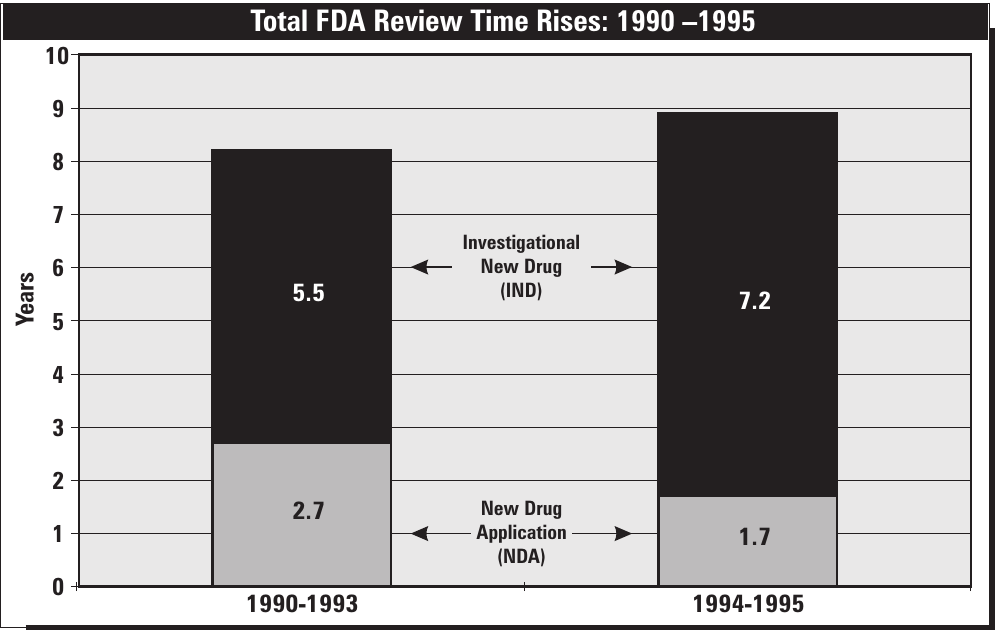
To make this claim, Dr. Kessler has fudged the facts and shifted the standard by which the FDA has been judged for the past quarter century. Over the past 25 years, government commissions, physicians, patients, industry and researchers have measured the FDA’s hidden drug lag: the time when new uses for existing drugs are found to offer better care or the only effective treatment and when patients can get them. The FDA policy requires that companies submit original research showing that each and every new use is effective before they can tell doctors and patients. It stands firm in its position that if the FDA doesn’t approve it patients should not know about it. Yet it takes the FDA an average of 28 months to approve each new use. That means if patients and doctors were to play by the FDA’s rules, they would have to wait up to 3 years to get therapies that have been determined to be clinically useful by the medical research community. To the extent that insurers and managed care companies are increasingly refusing to reimburse for “off-label” uses, the hidden drug lag compromises patient care.
In sum, patients are still waiting longer than necessary to obtain important new treatments. This is the true measure of the drug lag. The current FDA definition diverts the public’s attention from that issue and allows the agency to absolve itself of a responsibility to protect and promote the public health.[See Figure 1]
Squelching “Off-Label” Uses—The FDA’s “Hidden” Drug Lag
Most Americans believe that the FDA exists to protect them from unsafe drugs. Yet very little of the FDA’s budget or regulatory activity deals with the safety of new drugs. Increasingly, the FDA is getting into the business of telling people and doctors what drugs to take and for what purpose. In other words, the FDA would prefer that doctors only prescribe drugs for the purposes specifically listed on the label that are approved by the FDA. Never mind that the drug may be clinically proven to help other medical conditions, such as aspirin lowering the risk of heart attacks. The FDA has argued that it has the authority to squelch information about such “off-label” uses because of its mission of protecting the public from unsafe drugs.
The FDA claims that such off-label drug use is inherently unsafe and unproven because it doesn’t go through the same testing as do newly developed products. This claim flies in the face of years of clinical experience and careful research in real world settings. In fact, the type of testing that the FDA regards as the only real way to get information—randomly giving one group of people a drug and other group a sugar pill (placebo)—only tells whether the drug works as originally intended under extremely controlled and artificial conditions. It does not speak to what happens in the real world and as more is learned about a drug’s risks and benefits.
In fact, in maintaining that anything but this so-called randomized trial of drugs is unreliable, the FDA has been limiting and delaying access to information that in the past has already proven to be essential to the public health. While the FDA regards off-label uses as unsafe, useless, and potentially deadly, nearly 60 percent of all drugs on the market are found to be effective in treating people for disease and doses other than those approved by the FDA. As a result, many of the treatments the FDA would consider to be unsafe and ineffective are now considered essential to controlling depression, heart disease, and cancer. Moreover, such off-label drug use is more cost-effective than other products or methods of managing disease.
With Kessler at the helm, the FDA began to use the threat of approval delays to expand its power well beyond its basic mission of assuring that drugs are as safe as companies say they are. It now usurps the prerogative of patients and physicians by delaying or denying approval to drugs that the agency (not doctors and patients) concludes would be of little value. In the process, Kessler created an environment increasingly hostile to the public health.
The FDA and Aspirin
For instance, if people do not know or trust that aspirin can prevent heart attacks, they may thank the FDA and David Kessler. In 1988, after scientists discovered the connection, aspirin makers wanted to publicize the discovery. In 1989, the FDA called them in and told them they couldn’t advertise the good news because the agency hadn’t approved aspirin as a preventive heart medicine. Under Kessler, they couldn’t mention the study in any advertising or meetings. They couldn’t even pass out copies of the article. The only way the companies could make the public aware of the benefits of aspirin was to spend millions of dollars and several years duplicating results already published in the journal articles that the FDA forbade them to use. The companies complied. One can almost hear the sarcasm drip from his voice as Kessler himself observed: “Companies interested in maintaining positive relationships with the FDA usually agree to the FDA’s remedy [in advertising matters].”
Despite his claims to the contrary, under Kessler ’s administration, the time required to get drugs and devices through the FDA’s approval process increased each year. It took the FDA longer to approve old drugs for new uses than for new drugs to receive final FDA approval. In an era of explosive growth in medical knowledge, the number of new drugs and devices before the FDA declined and remained flat under Kessler [See Figure 2].
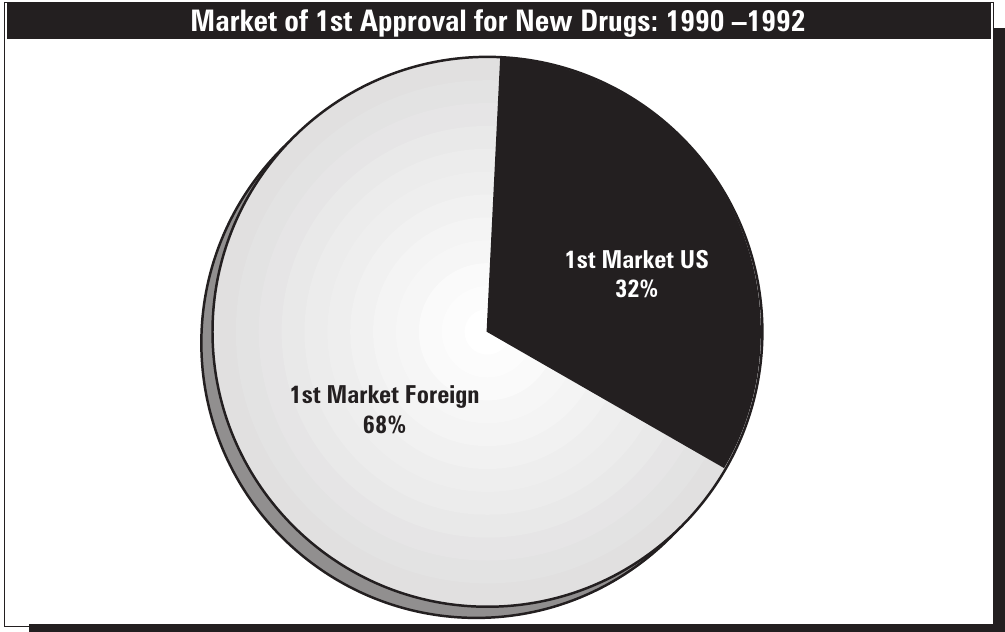
As a result, the deaths and suffering of many other Americans (Europeans usually get the drugs first) can be laid directly on Kessler ’s doorstep. The British Journal of Medicine estimates that 10,000 Americans die each year because they don’t know about aspirin’s value in reducing the incidence of heart attacks.
FDA: Choking the Flow of Information
Yet under Kessler, the FDA sought to expand its power over what information the public could have about the use and relative effectiveness of drugs in saving money, treating disease and improving the quality of life. The FDA banned companies from giving doctors textbooks that mention an off-label use of drugs. It shut down cancer newsletters and nearly brought cancer conferences to a halt for the same reason. It told Prozac’s creator, Eli Lilly & Co. that it will regard any discussion of Prozac in the popular press as a potentially false and misleading advertisement. The pharmaceutical company Merck was told that it couldn’t give doctors copies of National Institute of Health studies showing that its heart drug Vasotec reduced death in people with congestive heart failure. Clearly, Kessler desired to control the exchange of information on the comparative value of drugs and approaches to treating diseases.
Off-Label Risk vs. Public Risk
Dr. Kessler ’s assault on off-label drug information raises the question of how widespread are such uses? After all, as Kessler himself pointed out, the FDA asserted that it has the authority to stop extensive unapproved uses of drugs through a variety of approaches if it appears that such use jeopardizes the public health. At the heart of his reasoning was the contention that off-label promotion would result in the widespread adoption of unproven therapies that would put public health at risk. The following review of off-label uses suggest that Dr. Kessler had no evidence to support this contention.
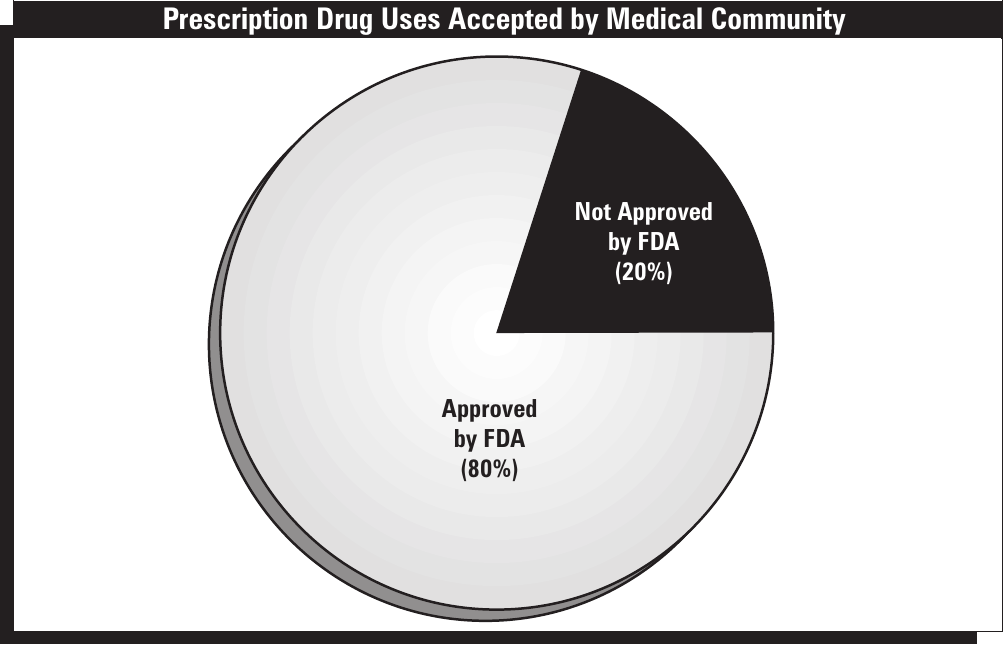
The American Medical Association conducted a survey of its members and determined that an average of 40 percent of all prescriptions are used in an off-label manner. Dr. Keith Johnson, director of the Drug Information Division of United States Pharmacopoeia Convention (USP)—a non-government organization that confirms and catalogues off-label uses after they are generally accepted in clinical practice—notes that off-label prescribing constitutes a large part of a physician’s daily prescription activities. The USP examined how much of what is universally considered to be good medical practice is off-label. It found that about 20 percent of all accepted medical indications are not approved by the FDA [See Figure 3].
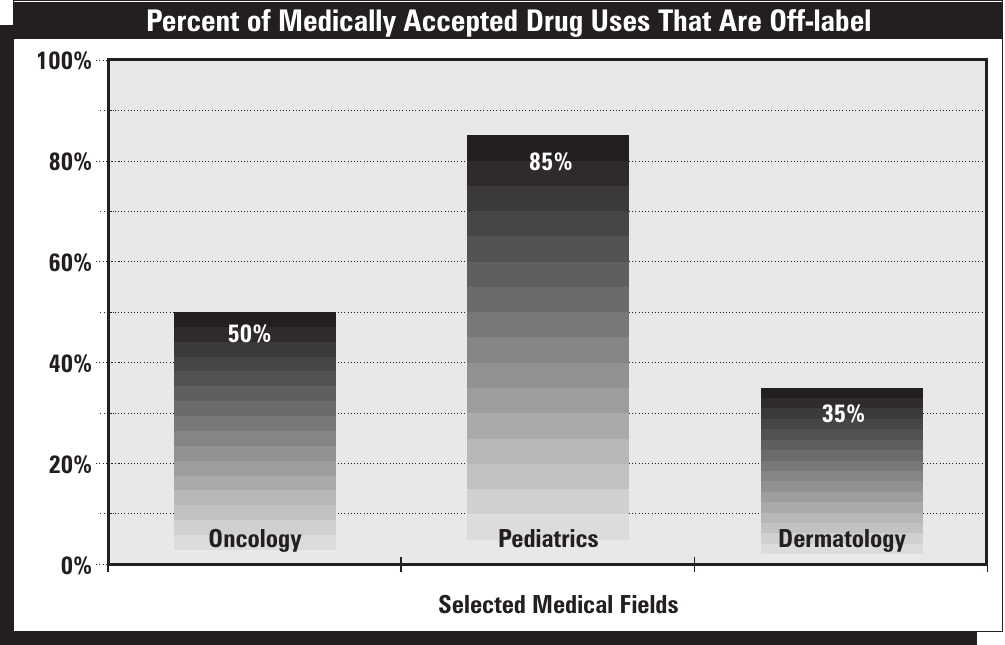
“In some specialties, oncology for instance, more than 50 percent of the [medically-accepted] indications are for off-label uses. Our pediatric working group feels that up to 85 percent of all drugs used in pediatrics in the United States are off label. Our latest figures for dermatologists indicate about 35 percent of all medically-accepted indications in the USP drug indications database for drugs used in dermatology are off-label.”11 [See Figure 4]
Other surveys show that 23 percent of all drug use during (mostly the third trimester) and after pregnancy is off-label. The primary purposes of the off-label uses were to avoid an obstetric complication such as premature labor and delivery, preeclampsia/eclampsia or improve the capacity for eventual postnatal adaptation. Another study found that off-label use during pregnancy was used to prevent repetitive abortion, reduce fetal and neonatal infection and stimulate ripening of the cervix or induction of labor.12 Similarly, an expert panel on off-label immunoglobulin drug use were in 100 percent agreement on 53 off-label indications. In children undergoing cancer treatment, 73 percent of dosing of an anti-nausea drug is off-label.13
The USP estimate does not include those off-label uses that are not yet generally accepted but are still supported by clinical research. One need not include what Johnson terms the broad bottom of off-label uses that are “pure hokum.” For the most part, the off-label uses not included in the USP are uses well supported by sound clinical observations, ranging from well-controlled, multicenter random trials to letters to the editor concerning individual case studies. To be sure, the quality of studies and the soundness of the databases must be sorted out. Nonetheless, it is quite clear that, to Dr. Kessler ’s chagrin, a substantial amount of good medical care is developed outside of the FDA’s review and approval process. It is also clear that off-label drug use—and the information that emerges from it—is an important source of medical information necessary to establishing the relative effectiveness of care.
At the same time, the evidence marshaled by Dr. Kessler that off-label uses endanger patients is both suspect and slim. Off-label use during pregnancy is an excellent example. Evidence collected according to FDA dictates—adequate and well controlled studies—are difficult to perform during pregnancy. Yet, unapproved use is both widespread and essential to the life and safety of both mother and child. There is no indication that the widespread use of off-label treatments during pregnancy endangers anyone.
Where’s the Danger?
In general, the FDA has no formal record of adverse events due to off-label prescribing. Indeed, the available research suggests that most adverse events, including hospitalization and death, are the result of human error and oversight, not the work of some mad scientist or drug company hell-bent on building market share. For example, 15 percent of all hospitalizations among the elderly are due to failure to comply with a prescription regimen consistent with FDA approved uses. Fully 30 percent of all ulcer-induced deaths and hospitalizations among the elderly are due to extended use of non-steroidal medicines prescribed in an FDA approved manner. Most drug-related overdoses and deaths among children are the result of parents misusing over-the-counter cough and cold medicines or failure to stick to the physician prescribed regimen for an ethical drug.
Kessler’s Smokescreens
In the past, Dr. Kessler has used the examples of the cardiac arrhythmia suppression trial (CAST), calcium channel blockers and Botox to “demonstrate” the dangers of off-label drug use and promotion. Under close examination, none of these cases are examples of either off-label drug promotion or the negative effects they have on public health:
-
The Cardiac Arrhythmia Suppression Trial (CAST) Study
As an example of the dangers of off-label drug promotion, The FDA cites the results of a 1989 study by the National Heart, Lung and Blood Institute’s which showed that using drugs approved to prevent arrhthymia also increased the number of patients who died due to sudden cardiac arrest.14 The Cardiac Arrhythmia Suppression Trial (CAST) I, was a randomized double blind, placebo controlled trial in which patients received the drug to suppress ventricular contractions or ventricular tachycardia. The study was designed to find out whether suppressing ventricular contractions after myocardial infarction reduced the incidence of sudden cardiac death. While the drugs suppressed the contractions, it also led to a higher rate of death among patients receiving the drugs than those who did not.15
The CAST study is actually a good example of how off-label uses emerge and the extent to which scientific rigor, as opposed to mindless acceptance on the part of the medical community, governs “unapproved” indications. Several physicians will explore a potential use. Their results are then subjected to rigorous scientific evaluation. In many cases, the National Institutes of Health (NIH) will conduct a full scale trial. If positive results continue to pour in relative to observed risks, off-label use grows. If the evidence shows, as it did during the CAST, that the drug did not work or had a dangerous effect, the drug use is discontinued.
It is important to note that the adverse, fatal effects of the antiarrhthymic drugs were discovered without FDA involvement and review. Secondly, it should also be noted that no promotion of these drugs for use in suppressing ventricular contractions ever occurred. Thirdly, it would have been an illegal act of off-label promotion for the innovators of these drugs to talk about their adverse effects, thus warning clinicians and saving patients lives.
-
Calcium Channel Blockers (CCBs)
Dr. Kessler asserted that drug companies are promoting the off-label use of CCBs to treat patients recovering from a heart attack instead of beta-blockers. Kessler felt that studies show that patients using CCBs had lower survival rates than heart attack patients receiving a placebo. However, he ignored other randomized trials which showed that CCB’s do no harm to patients with myocardial infarction (MI) as well as those studies of post-MI patients that showed CCBs providing some benefit.
Similarly, opponents of the off-label provisions of the Kassenbaum bill point out a study conducted by Dr. Bruce Psaty which suggested that some patients receiving CCBs have a higher risk of dying compared with patients receiving beta-blockers and diuretics.16 This study is held up as an example of the dangers of off-label use. Yet, in doing so, critics of off-label drug use ignore the fact the group of patients most likely to be at risk were also the sickest patients. Indeed, an FDA advisory panel agreed that no warning was needed precisely because the study looks only at drugs with older technology that have been supplanted by sustained release CCBs. Also ignored is the fact that two large studies of the impact of sustained-release CCBs in reducing MI among patients with mild-to-moderate hypertension have been underway for over two years without FDA’s instigation or enforcement. Finally, the FDA had its chance to ban the off-label use of CCBs completely. But the FDA Advisory Committee voted against a total ban because it determined that most appropriate course of action was to alert doctors who continued to prescribe acute-release CCBs to treat high blood pressure despite ample evidence that they should not.
In other words, inadequate dissemination of existing information on off-label drug use is at the heart of the potential hazards of using CCBs.By deciding to recommend that doctors be warned of the risk of using a particular drug in a specific way by disseminating existing off-label information more widely, the FDA acknowledged that off-label drug information has a safety value. Moreover, an FDA demand for larger, long-term studies on all CCB use would have been redundant because the market, as in other cases, demanded and began gathering such information first.
-
Botox (Botulinum Toxin Type A)
Dr. Kessler cites the promotion of the off-label use of Botox as an example of how the public can be endangered by such activities. Botox was approved to treat dystonias, involuntary muscle spasms (such as little twitches around the eye), and eye muscle disorders. The FDA approved it for that purpose over 12 years ago. At one time Botox was promoted for the treatment of wrinkles. There is no evidence of any adverse events from its promotion for wrinkles or that it led to widespread use. Although Botox contains botulism, a potentially fatal form of food poisoning that causes breathing difficulty and paralysis, Botox is a purified, man-made version of the botulism toxin. During the treatment of wrinkles, the dosage does not approach an amount large enough to cause any symptoms of the illness.
The FDA ignored the fact that at least one study has shown Botox to be effective in treating wrinkles. Dr. William J. Binder, an assistant clinical professor of surgery at the University of California at Los Angeles, began using Botox for cosmetic purposes less than a year ago, following a two-year combined study at UCLA and Columbia University in New York. The study, which included 220 subjects, allowed Binder and his colleagues to determine optimal doses and refine techniques for administering the treatment.
Dr. Kessler did not reveal the discovery of other important off-label uses for Botox. In particular, it has been found to be a promising treatment for other diseases previously treated by the removal of muscle tissue. A NIH panel went so far to publicly disclose the results of studies using Botox in this manner because of its promise as a potentially superior treatment alternative.
In addition, neurologist Mitchell F. Brin of Columbia University in New York City reported at a meeting of the American Academy of Neurology that he treated seven such patients by injecting their vocal cords with tiny amounts of Botox. The toxin relaxed the muscles, allowing four of the seven to speak much more easily and clearly, without any significant side effects. Brin has also used Botox successfully in another off-label fashion. He has treated more than 500 patients with a related disorder, spasmodic dysphonia, in which the vocal chords undergo speech-preventing spasms.17
How the Ban on Off-Label Promotion Undermines Safety
As the following examples demonstrate, Dr. Kessler ’s conclusion that “…clinicians should not base prescribing decisions on drugs that have not been adequately studied for both safety and effectiveness for any claim, and therefore should not be exposed to any information about such a product” simply does not apply logically to circumstances where a therapeutic claim has been supported, and carefully balanced information is provided about other claims.
Yet under Dr. Kessler, any discussion of off-label drug use in almost any forum was illegal. This included discussion or dissemination of information on the safest and most appropriate uses of off-label indications. Drug companies who . . . arguably had the most data on the toxicity and potential side effects of different uses of products, were not allowed to discuss ways to improve the safety of existing off-label uses. Such restrictions made it more difficult for physicians, health plans, and insurers to sort out and clarify important distinctions and qualifications in the literature. This was particularly the case for primary care physicians who treat patients suffering from heart problems.18 In these and other examples that follow, it has become apparent that rather than protecting the public health from unsafe drug use, the “current proscription on off-label promotion may actually facilitate rather than limit such [unsafe] practices.”19 Note the following examples which support this claim.
-
Etoposide for Non-Hodgkin’s Lymphoma (NHL) in the Elderly
Treating NHL in older patients is difficult because cancer drugs approved for that treatment demonstrate increased toxicity and limited efficacy. Studies conducted at the National Cancer Institute found that the off-label use of another cancer drug—etoposide—was very effective in treating NHL in the elderly in combination with other agents.20
Tolerability of the drug needs to be improved in order to increase the number of patients who become cancer-free. Ideally, the pharmaceutical firm that makes etoposide would be able to work with oncologists to actively promote the safest dosage and drug combination possible. However, such dissemination was barred by the FDA under Dr. Kessler.
-
Desipramine for Bed Wetting in Children.
Desipramine is one of the tricyclics used to treat depression in adults. It has been employed in the treatment of bedwetting in children since the early 1970s. A substantial body of literature, including randomized trials, has demonstrated that the drug effectively controls bedwetting in children. At the same time, there have been at least 13 deaths since 1973 in children taking desipramine. Ten deaths were due to overdoses, two involved children taking multiple drugs and one death was due to child abuse.
Clinical literature on the use of desipramine has established that before starting a child on any tricyclic, a doctor should conduct a thorough physical examination, an electrocardiogram, and insure there is no history of sudden death in among family members under 40 years of age. Every time a dose level is increased, the child’s blood levels are checked and an electrocardiogram is administered.
Here too, the proscription on off-label promotion limits the extent to which patients and doctors can get important scientific information on the safety of a certain use or dosing regimen. Despite the widespread use of tricyclics in treating children, companies are prohibited from disseminationg information on appropriate off-label treatments.
-
tPA For Myocardial Infarction
Prior to its FDA approval, research on the use of the clot-breaking drug tPA found that a change in dosing strategy increased the survival rate of patients undergoing myocardial infarction. Proper dosing was also found to alleviate complications due to excessive bleeding as a result of using the drug. The new dosing regimen was deemed an off-label use of tPA and the company’s developer, Genentech, was barred from distributing information about the new approach by the FDA. As a former FDA official has written: “Is it true that the net effect of decisions made by physicians throughout the U.S. in an environment of controlled and balanced “off-label” advertising would be worse than decisions made currently...?”21
-
Discontinuation of Antihyperlipidemic Drugs
For drugs used to treat chronic conditions, failure to stick to the prescribed regimen is one of the most important reasons for treatment failure. In some instances, the FDA-approved dosing leads to higher rates of discontinuation because the effectiveness and tolerability of medications in actual practice settings. A study conducted by researchers at the Harvard School of Public Health found that new users of cholesterol lowering drugs at two HMOs were more likely to stop using the medicines than in randomized clinical trials.22 Under Dr. Kessler ’s interpretation, companies that disseminated this information or any other findings on proper dosing or how to improve regimen compliance would be treated as off-label promotion and therefore illegal.
Is Off-Label Promotion Necessary for Good Medical Practice?
Supporters of the off-label promotion ban contend that such limits do not stop researchers, doctors and patients from obtaining and applying information on unapproved uses. Indeed, as Dr. Robert Temple, director of the FDA’s Office of Drug Evaluation has asserted: “I remain puzzled by the idea that highly educated people like physicians can’t get information unless it’s provided for them by a drug company.”23
Such statements must be taken with a grain of salt. After all, it is the position of Dr. Kessler and the FDA that “...unless the drug is being administered under an IND (investigational new drug), a NDA (new drug application) should be in effect for each particular use of a drug.” The grudging acceptance of off-label prescribing should not be confused with a public stance of “don’t ask, don’t tell” as long as drug companies don’t disseminate the information.
Indeed, the evidence suggests that highly educated people like physicians are also highly busy people who find it both difficult and time consuming to seek out new information on off-label drug uses. To the extent that doctors base clinical decisions on formulary guidelines or long-standing treatment regimens, they do not have, as the FDA stated in 1982, access to all the valuable medical knowledge they could use to help them make these clinical decisions without an efficient way to gather information about off-label uses.
Research suggests that if patients and doctors were to wait to apply off-label uses until the FDA got around to reviewing and approving them, Americans would be waiting years to obtain new medical information. An analysis of the FDA review times of supplemental indications for already approved drugs found that between 1989 and 1994, that the mean supplemental review time was 28.3 months.24 Dr. Temple claims that this delay is artificial, that doctors can and do prescribe drugs off-label, using medical journals as their reference point.
It would appear that the FDA’s ban on off-label promotion, combined with the excessive delay has created what can be called a hidden drug lag—the gap between what helps patients and when they can know about it.
According to Dr. Keith Johnson, head of the United States Pharmacopoeia Convention, off-label drug use is good medicine if properly approached, but the approach can be time-consuming. “Physicians must sift through immense amounts of information to determine the appropriateness of off-label uses. One estimate is that even if a physician could read two medical articles a day every day, he would wind up 55 centuries behind in his reading at the end of the year.” Similarly, Dr. Sam Broder, former director of the National Cancer Institute, has noted that it is virtually impossible for any one doctor, let alone a specialist, to keep up with potential advances in treatment. Because active dissemination is critical to educating doctors on appropriate clinical practice, the FDA’s ban on off-label promotion creates what Dr. Johnson refers to as “orphan information”—valuable medical knowledge that has no home due to FDA limits on its free distribution.
Restricting Information Hurts Patients
Moreover, a recent study of the impact of promotion on the number of patients receiving an FDA-approved treatment for a new use with an old drug suggests that the ban on promotion limits patient access to important and scientifically-supported off-label uses.25 The study showed that “after the approval of the new use, promotional expenditures led to significant increases in the drug’s share of the market.”
Most importantly, the number of patients treated with the new use increases significantly after approval. Significantly, the study shows that the increase in patients treated is not due to the increase in journal advertising or additional promotional expenditures. Approval simply promotes wider dissemination. For instance, the number of journal articles discussing the new uses increases after FDA approval. This suggests that lifting the ban on off-label promotion would stimulate more patient care, more evaluation and a broader dissemination of new medical information.
Evidence on adoption of clinical practices underscores the finding of this article. For example, even though several large clinical studies have demonstrated that imipramine is the drug of choice for treating panic disorder, only 25 percent of all psychiatrists prescribe it. According to Donald Klein, M.D, Chief of Psychiatry at Columbia University Hospital, “ the low percentage is due to the fact that imipramine is off-patent, its developer has no incentive to seek FDA approval, and it is prohibited by the FDA from disseminating information on its off-label use.”
Similarly, though medical research has established that antibiotics are now the treatment of choice for ulcers (because they have been found to be bacterial in origin), less than a third of primary care physicians prescribe them and use H-2 blockers instead. Again, the FDA’s ban on off-label promotion barred companies from actively marketing antibiotics for this treatment. (The FDA recently approved a combination antibiotic therapy for ulcers more than two years after its effectiveness had been established.)
Finally, through much research, including a large randomized clinical trial, it has been shown that aspirin can reduce the rate of first heart attacks and also ease their severity and the long term damage they cause. Yet, the FDA bans dissemination of these findings because it would be an off-label promotion. Not surprisingly, a recent study found that primary care physicians are less likely to put patients at-risk for heart attacks on an aspirin regimen. According to Harlan M. Krumholz, MD, assistant professor of medicine and epidemiology at Yale University, “Despite its proven effectiveness in preventing or postponing second heart attacks, aspirin is not prescribed for nearly a quarter of elderly heart attack survivors upon leaving the hospital.”26
Conclusion
The FDA’s misuse or abuse of regulatory authority has been a constant complaint of drug and device companies and its critics for 30 years. Why then focus on David Kessler ’s actions? Because under Kessler the FDA became the only legitimate arbiter of what is regarded as a threat to public health. Second, only the FDA has the legal and ethical right to define what that threat is. Third, because Kessler ’s particular justification of FDA’s power demanded that the agency be accountable to no one and that neither he nor the agency accept responsibility for the consequences of its decisions and behavior. And fourth, Kessler more skillfully and aggressively exploited FDA’s control over product approval and market access—the means of production—in order to leverage its power.
It would be a mistake to assume that it is possible to reinvent the FDA by simply appointing a new commissioner. Kessler ’s use of power not only set a standard that the media and reformers will use to judge future commissioners, but he also transformed the way the FDA operates, politicizing its decisions and decision-making apparatus to an unprecedented degree and making it less accountable to political oversight than at any other time in recent history. In doing so he created a new FDA in his own image, successfully expanding the range of important medical decisions that will be controlled by the FDA. And as this report shows, his triumph comes at the expense of individual choice, the public’s health, and the public’s well-being.
Endnotes
- Dr. David A. Kessler, MD, “The Basis of the FDA’s Decision on Breast Implants”, New England Journal of Medicine, June 18, 1992, pages 1713-1715. ↩
- Gina Kolata, “A Case of Justice or a Total Travesty?” The New York Times, June 11, 1995 page D1. ↩
- Reuters, August 1, 1995. ↩
- Gina Kolata, “A Case of Justice or a Total Travesty?” The New York Times, June 11, 1995 page D1. ↩
- David Kessler, Testimony Before the Subcommittee on Human Resources and Intergovernmental Affairs, Committee on Government Reform and Operations, US House of Reps. August 1, 1995. ↩
- Dr. Elizabeth Cornell, Testimony Before the Subcommittee on Human Resources and Intergovernmental Affairs, Committee on Government Reform and Operations, US House of Reps. August 1, 1995. ↩
- Mark Heller, “An Accident Waiting to Happen” in When Lightning Strikes, Wayne L. Pines, ed. Washington Business Information, Inc., November 1995. ↩
- Gina Kolata, “A Case of Justice or a Total Travesty?” The New York Times, June 11, 1995 page D1. ↩
- Charles H. Hennekens, MD, DrPH; I-Min Lee, MBBS, ScD; Nancy R. Cook, ScD; Patricia R. Hebert, PhD; Elizabeth W. Karlson, MD; Fran LaMotte; JoAnn E. Manson, MD, DrPH; Julie E. Buring, ScD “ Self-reported Breast Implants and Connective-Tissue Diseases in Female Health Professionals “(JAMA. 1996;275:616-621) Compared with women who did not report breast implants, the relative risk (RR) of the combined end point of any connective-tissue disease among those who reported breast implants was 1.24 (95 percent confidence interval,1.08 to 1.41, P=.0015). With respect to the individual diseases, the finding for other connective-tissue diseases (including mixed) was statistically significant (P=.017), the findings for rheumatoid arthritis, Sjoegren’s syndrome, dermatomyositis or polymyositis, or scleroderma were of borderline statistical significance (.05<P<.10), and the finding for systemic lupus erythematosus was not statistically significant (P=.44). There were no clear trends in RR with increasing duration of breast implants. ↩
- Dr. David A. Kessler, MD, “The Basis of the FDA’s Decision on Breast Implants”, New England Journal of Medicine, June 18, 1992, pages 1713-1715. ↩
- T.A. Ratko, D.A. Burnett, et. al., “Recommendations for Off-Label Use of Intravenously Administered Immunoglobulin Preparations,” JAMA, June 21, 1995, Volume 273, No. 23, pages 1865-70. ↩
- W.F. Rayburn, G. L. Turnbull, “Off-label drug Prescribing In a State University Obstretic Service.” Journal of Reproductive Medicine, Volume 40 No. 3 pages 186-8. See also W.F. Rayburn, “A Physicians Prerogative To Prescribe Drugs For Off-Label Uses During Pregnancy.“ Obstetrics Gynecology, June 1993, Vol. 81, No. 6, pages 1052-5. ↩
- K.D. McQueen, J.D. Milton, “Multi-center Postmarketing Surveillance of Ondansetron Threapy in Pediatric Patients.” Annals of Pharmacotherapy, Jan, 1994, Vol. 28, No. 1, pages 85-92. ↩
- H.M. Grenber, E.M. Dwyer Jr., et. al., “Interaction of Ischaemia and Encainide/Flecainide Treatment: A Proposed Mechanism for the Increased Mortality in CAST I.” British Heart Journal, Vol. 74, No. 6, December, 1995, pages 631-5. ↩
- J.L. Anderson, E.V. Platia, A. Hallstrom, et. al., “Iinteraction of Baseline Characteristics With the Hazard of Encainide, Flecainide and Moricizine Therapy In Patients With Myocardial Infarction. A Possible Explanation For Increased Mortality in the CAST.” Circulation, Vol. 90, Number 6, December, 1994, pages 2843-52. ↩
- B.M. Psaty, et. al. “The Risk of Myocardial Infarction Associated With Anti-hypertensive Drug Therapies,” JAMA, Volume 274, August 23-30, 1995, pages 620-625. ↩
- Thomas. H. Maugh II, “Drug Treatment Attacks Mechanisms That Cause Stuttering, Neurologist Says,” Los Angeles Times Friday May 8, 1992, Section A, page 12. ↩
- “Survival Rate in Heart Attacks is Linked to the Type of Doctor” New York Times, November 5, 1995 page B7. See also Krumhold, H.M., et al. “Aspirin in the Treatment of Acute Myocardial Infarctions in Elderly Medicare Beneficiaries: Patterns of Use and Outcomes.” Circulation, Vol 92, November 15, 1995, pages 1841-2847. ↩
- Jur Stobos, Former Director of Policy Planning for the FDA, “Stoning a Dead Bird: Advertising Limits on Approved New Uses,” unpublished manuscript, page 14. ↩
- Young, W.A. et. al. “Etoposide for Non-Hodgkin’s Lymphoma in the Elderly.” Journal of The National Cancer Institute, 1994; Vol 86: 1346-1347. ↩
- Stoning a Dead Bird, page 14. ↩
- Susan E. Andrade, Alexander M. Walker, Lawrence K Gottlieb, Norman K. Hollenberg, Marcia A. Testa, Gordon, “Discontinuation of Antihyperlipidemic Drugs—Do Rates Reported In Clinical Trials Reflect Rates In Primary Care Settings?” New England Journal of Medicine April 27, 1995; 332(17):1125-31. ↩
- Robert M. Goldberg, “Breaking Up the FDA’s Medical Information Monopoly,” Regulation, 1995, Number 2, page 47. ↩
- Joseph A. DiMasi, Jeffrey S. Brown, Louis Lasagna, “An Analysis of Regulatory Review Times of Supplemental Indications for Already Approved Drugs: 1989 to 1994.” Tufts Center for the Study of Drug Development, In Press: Drug Information Journal, 1996. Page 2. ↩
- J. Howard Beales, III, “Marketing Information and Pharmaceuticals: New Uses for Old Drug.” Conference Paper, Competitive Strategies in the Pharmaceutical Industry, American Enterprise Institute, Washington, DC, October 27-28, 1993. ↩
- Secondary Prevention Drugs Not Prescribed for Many Older Heart Attack Survivors.” Press Release from American Heart Association, November 13, 1995. ↩
About The Author
Robert M. Goldberg is a Senior Research Fellow at George Washington University’s Center for Neuroscience, Medical Progress and Society. He is also an adjunct scholar at the American Enterprise Institute for Public Policy Research in Washington, DC.
Dr. Goldberg has focused on the effect FDA regulation have had on public access to medical innovation and the doctor-patient relationship. He is also doing research on the future of Medicare. Through his earlier writing, conferences and lectures, he has been instrumental in forcing a re-evaluation of the Clinton Administration’s Vaccines for Children Program and the new child health care entitlement. He is currently working on an article examining the how child advocates are using junk science about infant brain development to push for greater government support of Headstart, day care and nursery school education.
Dr. Goldberg is the author of numerous articles and reports including “The Vaccine for Children Program: A Critique” and “What Has Happened to the Healing Process” an article on the demise of the doctor-patient relationship under managed care. He writes regularly for the Wall Street Journal, and other articles have appeared in Reader ’s Digest, The Washington Times and the Washington Post.
Dr. Goldberg has taught political science at American University and Georgetown University. He received his Ph.D. from Brandeis University in public policy in 1984.
About IPI
The Institute for Policy Innovation (IPI) is a non-profit, non-partisan educational organization founded in 1987. IPI’s purposes are to conduct research, aid development, and widely promote innovative and non-partisan solutions to today’s public policy problems. IPI is a public foundation, and is supported wholly by contributions from individuals, businesses, and other non-profit foundations. IPI neither solicits nor accepts contributions from any government agency.
IPI’s focus is on developing new approaches to governing that harness the strengths of individual choice, limited government, and free markets. IPI emphasizes getting its studies into the hands of the press and policy makers so that the ideas they contain can be applied to the challenges facing us today.
Nothing written here should be construed as necessarily reflecting the views of the Institute for Policy Innovation, or as an attempt to aid or hinder the passage of any bill before Congress.
IPI Publications
The Institute for Policy Innovation publishes a variety of public policy works throughout the year. Interested parties may receive some or all of these publications free of charge, upon request:
IPI Insights is a colorful, quarterly newsletter that contains a variety of short articles on policy topics in a popular format.
TaxAction Analysis’ Economic Scorecard is a quarterly review of the nation’s economic performance, with particular emphasis on federal government policy, looking especially for long-term trends.
Policy Reports are longer, 16-60 page studies on a variety of policy topics, complete with charts, tables, graphs and endnotes.
Quick Studies are four page summaries of IPI Policy Reports designed to make the key information easily accessible.
Issue Briefs are shorter, 4-16 page studies on a variety of policy topics, complete with charts, tables, graphs and endnotes.
Original Publication Information
Institute for Policy Innovation · Policy Report #143 · 1997
Copyright ©1997 Institute for Policy Innovation
Nothing from this document may be reproduced or transmitted in any form or by any means, electronic or mechanical, including photocopying, recording, or by any information storage and retrieval system, without permission in writing from the publisher, unless such reproduction is properly attributed clearly and legibly on every page, screen or file.
The views expressed in this publication do not necessarily reflect the views of the Institute for Policy Innovation, or of its directors, nor is anything written here an attempt to aid or hinder the passage of any legislation before Congress.
Contact information as printed in 1997:
Direct all inquiries to:
Institute for Policy Innovation
250 South Stemmons,
Suite 215
Lewisville, TX 75067
(972) 219-0811 [voice]
(972) 874-5144 [fax]
Email: ipi@ipi.org
Website: www.ipi.org
How You Can Contact the Institute for Policy Innovation (as printed in 1997)
The Institute for Policy Innovation invites your comments, questions, and support. You can reach IPI in several ways, either by phone, fax, mail, email, or through our Internet Home Page.
IPI’s mailing address is:
250 South Stemmons Frwy., Suite 215
Lewisville, TX 75067
(972) 219-0811 [voice]
(972) 874-5144 [fax]
IPI’s email address is:
ipi@ipi.org
IPI also maintains a home page on the World Wide Web, part of the Internet. Through IPI’s home page you may view, print or download any of IPI’s publications in HTML or Adobe™ Acrobat™ format.
You will find IPI’s home page at:
www.ipi.org