

Tom Giovanetti is president of the Institute for Policy Innovation (IPI), a 38-year-old conservative, free-market public policy “think tank” based in Dallas, Texas.
In addition to his administrative and fundraising duties, Tom writes for IPI and for leading publications on a variety of policy topics including tax policy, economic growth, self-government, civil liberties and constitutional protections, judicial supremacy, intellectual property, Social Security personal accounts, technology and Internet policy, and government spending. In addition to being regularly published in major outlets including the Wall Street Journal, Washington Times, FoxNews.com and The Dallas Morning News, Tom writes often for the Fort Worth Star-Telegram. Tom frequently appears in the media and is a regular guest and occasional substitute host of the Mark Davis Show in the Dallas-Fort Worth market.
Tom loves thinking out-of-the-box to design novel solutions to policy problems and explaining complicated policy issues in ways average folks can understand.
Tom's mission at IPI is to use issues to teach conservative, free market thinking and to push back against unprincipled populism. He seeks to encourage continued skepticism of Big Government, to maintain faith in markets, and to defend individual liberty as the best means of achieving human flourishing. His most recent work has focused on free market solutions to student loan debt, preserving online freedom, and persuading state legislatures to override local and municipal rules that restrict economic liberty.
Mr. Giovanetti has represented IPI at many national and international organizations, including the World Intellectual Property Organization (WIPO), the Internet Governance Forum (IGF), and represented IPI during negotiations on the Trans-Pacific Partnership (TPP) trade agreement. Mr. Giovanetti is a popular speaker and writer and testifies before state and federal legislative committees on a variety of topics.
Follow Tom on Twitter (X) at @tgiovanetti

'Right to Repair' Is Bad for Your Health
“Right to repair” sounds sympathetic but it’s a wolf in sheep’s clothing. It’s not being pushed by small repair businesses but by ideological public-interest law firms and activists as an attack on intellectual property.

Why World IP Day Matters
Property rights are the foundation of a market economy. If you don’t have clear property rights, no one can really enter into contracts to buy and sell anything.
Coalition Letter On Expensing
Coalition letter on behalf of taxpayer, free-market, and consumer advocacy organizations, asking lawmakers to prioritize and pass a number of tax relief measures this year that will aid in America’s economic recovery from the COVID-19 pandemic.
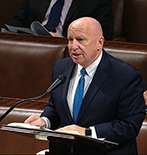
Thank You, Mr. Brady
Kevin Brady can retire with the knowledge that he accomplished his number one policy goal: fundamental tax reform.
Testimony on Texas House Bill HB 2587, "Relating to the Censorship of Users' Expressions By an Interactive Computer Service
The most shocking and counterproductive thing that could happen with this legislation is that by declaring private businesses to be part of the “public square” as a means of justifying speech regulation, or by redefining terms like “common carrier,” you will be unintentionally facilitating a dramatic increase in the government’s power to regulate private speech.

Coalition Letter in Support of Mileage-Based User Fees for Highway Funding
Increasing the reliance of the Highway Trust Fund on revenue streams untethered from use, as well as general fund bailouts, would not only fail to address the core fiscal challenges of the present, it would threaten the future health of America’s highways.

Testimony Before the State Affairs Committee Texas House of Representatives Regarding Utility Pole Access
Testimony regarding HB 1505 that creates a system to fairly allocate the costs of replacing utility poles without making it unnecessarily costly to roll out broadband.

Even in a Pandemic, Here Is a Tax That Texas Republicans Can Cut
It’s time for Texas legislators to cut the video franchise fee. It is paid by Texas video customers and makes their bills higher than necessary. For 16 years Texas consumers have been footing the bill for a political payoff.
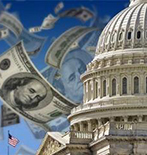
Everything Is Seemingly Spinning Out of Control
In FY2020, federal revenues were $3.42 trillion, but federal spending was $6.5 trillion. In other words, the federal government spent almost TWICE what it took in. That’s not sustainable.
Coalition Letter Addressing the Homework Gap through the E-Rate Program
Total Records: 773

