
 All businesses consume resources. Some more than others.
Heavy manufacturing, something many voters say they want to return to these shores, consumes enormous quantities of energy and raw materials. Same with semiconductor fabs—they consumer enormous quantities of water and electricity. The federal government is actively encouraging construction of semiconductor fabs and manufacturing in the U.S.
Refineries, something the public says we need more of, take up enormous space, make a lot of noise, fill the night sky with bright light, and use a lot of water and electricity. Yet the public says they want them here.
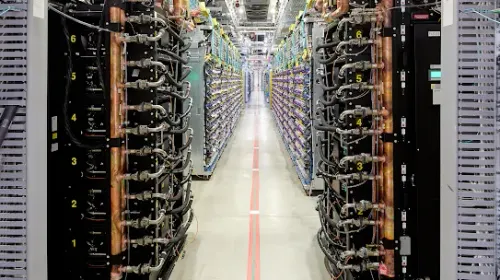
The romantic attachment so many seem to have for old-economy heavy industry with its pollution and hazards to workers clearly doesn’t extend to the 21st-century modern data economy, as physically represented in data centers, which are cleaner, safer, quieter and less demanding on the environment.
All that fun stuff you do online? All your eBaying, Amazoning, Etsying, Facebooking, Xing, emailing, texting, Instagramming, Netflixing, Googling and storing thousands of unnecessary photos? That’s where it all happens. Where did you think it happened?
Data centers, like all businesses, pay for their inputs. They pay for the resources they consume. Because businesses pay for their inputs, they have an incentive to be as efficient as possible. Waste is money lost. So data centers have every incentive to conserve water, to conserve electricity, to operate efficiently—because they have to pay for their inputs.
Data centers don’t sneak out at night and steal electricity from the grid. They buy it. They don’t show up at municipal reservoirs with siphons and buckets. They pay for the water they use.
In fact, data centers are the “killer app” for investment in additional electrical generation, transmission, storage, cooling technologies and water efficiency. As such, data centers literally make the grid more reliable, while using less water than golf courses, car washes, steel mills, refineries, and chip fabs.
Bashing data centers makes no sense. It’s just the latest bit of hysteria, and policymakers are supposed to see through the hysteria, not cravenly cave in to it. It’s the anti-fracking playbook, recycled.
But a quick aside to the AI companies, whose data centers we are here defending:
Remember how we’ve stressed that data centers pay for their inputs? Well, one of the inputs to AI is written, spoken, recorded and filmed content. Much of which is protected by copyright.
Those works are inputs too.
If an AI company has to pay for electricity, land, water, chips and engineers, why would anyone think the creative works used to train its models should be free?
AI shouldn’t get its training materials free any more than it should get its water or electricity for free. That’s not unnecessary friction—it’s paying for your inputs.
We’re bullish on data centers and bullish on artificial intelligence. Both will generate enormous economic value and innovation.
But innovation doesn’t grant special dispensation to conscript the property of others. You don’t get to eminent domain someone’s intellectual property.
Data centers pay for their electricity. They pay for their water. And AI should pay for its content inputs, too.