

“It is the maxim of every prudent master of a family, never to attempt to make at home what it will cost him more to make than to buy . . . . If a foreign country can supply us with a commodity cheaper than we ourselves can make it, better buy it of them with some part of the produce of our own industry, employed in a way in which we have some advantage.”
-Adam Smith, An Inquiry into the Nature and Causes of the Wealth of Nations, 1776
IPI believes the United States should aggressively pursue trade liberalization, which includes a willingness to lower our own trade barriers even when other countries do not respond reciprocally. Ideally, those efforts include multilateral agreements, such as the Trans-Pacific Partnership, but bilateral agreements can also promote freer trade.
American consumers bear the brunt of the protectionist impulse through higher prices on consumer goods, and American workers are best served when liberalized trade policies facilitate the export of American products throughout the world. At a time when protectionist sentiments are growing, it is important to assert that the U.S. and its workers have nothing to fear from trade, and everything to gain.
Texas Is Top State for International Trade, but It Could Be Even Better
New international trade agreements would lower tariffs and establish substantially more robust commercial channels with countries whose markets offer new opportunities for Texas companies, farmers and workers.
The Case for Permitting Crude Oil Exports
Since the 1970s, U.S. law has banned crude oil exports. But with new drilling techniques dramatically increasing U.S. oil production and the willingness of unfriendly countries to use oil and natural gas supplies as a foreign policy hammer, it's time to repeal that export ban.
U.S. IPR Protection Insistence May Derail TPP Talks, Critics Say
Strong protection of IPR is critical to boosting U.S. exports through its free-trade agreements. Speaking at a Cato trade conference, panelist Tom Giovanetti stated, "The largest silo of U.S. exports are the core IP industries."
Intellectual Property and the Trans Pacific Partnership
Presentation given by IPI President Tom Giovanetti at the Cato Institute event titled "Intellectual Property in the Trans-Pacific Partnership: National Interest or Corporate Handout?"
Kerry Wants Another Failed Global Environment
If the Obama administration really wants to help reduce greenhouse gas emissions without hamstringing the world economy with costly energy restrictions, it would stop its perpetual slow-walk of drilling permits on federal lands and offshore and give a full-speed-ahead to natural gas exports.
U.S. can sweeten its sugar trade by ending subsidies
The best solution to sugar (and other agriculture) subsidies is a freer and more sustainable global sugar trade system, and that should be the strategic goal of U.S. sugar policy.
Solving the Sugar Subsidy Problem
The sugar subsidy problem will never be solved until WTO member nations can agree to a freer and more sustainable global sugar trade system. Such a system should be the strategic goal of U.S. sugar policy.
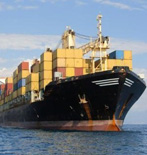
Conservatives Should Know It Takes Big Government to Stop Free Trade
Some conservatives face a dilemma: They don’t like free trade, but trade, including with other countries, is what free people naturally do. And the only way to limit that freedom is with a big, interventionist government, which conservatives have always opposed.
LNG export would be good for Maryland
Liquid natural gas exports could generate 9,500 jobs in Maryland alone by 2035 and increase state wages.
Total Records: 177

