


For all of the quality care it delivers, the U.S. health care system is one of the most dysfunctional sectors of the U.S. economy. The government spends nearly 50 cents of every dollar spent on health care, most consumers are almost entirely insulated from the cost of their decisions, and employers decide what kind of health insurance their employees get.
But while the U.S. health care system begs for reform, the Patient Protection and Affordable Care Act only exacerbates all of the current problems, promising to devolve into a price-controlled system rationed and micromanaged by bureaucrats.
IPI believes there are much better options: reform the tax treatment of health insurance; remove the state and federal mandates and regulations that make coverage more expensive; pass medical liability reform; and promote policies that create value-conscious shoppers in the health care marketplace.
Walker, Rubio Present Plans to Repeal and Replace Obamacare
IPI's Merrill Matthews says Walker’s plan is a little more detailed than Rubio’s and focuses on people without employer-based plans. “Rubio wants to give everyone a tax credit, which is the right thing to do, but it’s very difficult to explain to the public. It also talks about expanding Medicare, but how do you expand Medicare and pay for it?”
The Problem With G.O.P. Plans to Sell Health Insurance Across State Lines
If uniform rules, alone, were enough to ensure a broad array of competitors, you might expect to see many insurers participating. But that does not seem to be the case. “Just because a good affordable policy is available in another state doesn’t mean that I would be able to get the network of physicians and the good prices that are available in that other state," said IPI's Dr. Merrill Matthews.

Here Come the Obamacare Price Control Police
We have passed Phase 1 and are in the midst of Phase 2: beginning the process of imposing price controls—in this case, trying to get state insurance commissioners to lean on health insurers that are seeking significant premium increases.

Busted: The Liberal Claim You're Too Stupid To Make Health Care Decisions
A new report claims that Americans are becoming better consumers in the health care marketplace.
Senate Bill Would Allow Over-the-Counter Sales of Birth Control Pills
Prior to the passage of Obamacare, allowing the sale of birth control over the counter would have been hailed by liberals as a great achievement for women, says Merrill Matthews. It would have improved access to care by lowering out-of-pocket costs and eliminating the need to spend time and money to see a doctor for the prescription, which is a bigger burden for hourly workers and lower-income women, he said.

My Wife's Losing Her Obamacare Coverage Because The Insurer Lost $400 Million
If you ask President Obama how Obamacare is going, he will say awesome, couldn’t be better. But how about asking 367,000 Texans who are having their health insurance coverage eliminated because the insurer lost $400 million on that group in 2014.
After 50 Years, Medicare Should Get Early Retirement
aily, In a column for Investor's Business DGrace-Marie Turner of the Galen Institute and Merrill Matthews of the Institute for Policy Innovation highlight some of the same problems with cost and quality, but they also add important insight about how Medicare has caused rising health care costs.
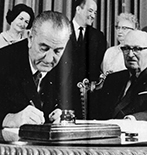
Medicare Turns 50--Here's Why People Still Love It But Hate Obamacare
Unlike Obamacare, Medicare was bipartisan, targeted and an improvement. It has hit 50 largely unchanged—at least for seniors—from its original form. Obamacare is unlikely to make 10 without significant changes—if it survives at all.
Medicare's Birthday: A Failed Centralized Program Turns 50
On this 50th anniversary of Medicare and Medicaid, as our nation struggles with its latest effort at health reform, it's a good time to reflect on the programs' successes and failures.
Planned Parenthood May Walk A Thin Legal Line, But Do Its Practices Stand Up To Ethical Scrutiny?
It is legal in the U.S. for medical facilities to be reimbursed for their reasonable costs for harvesting human tissue and organs, but it is illegal to sell them for profit.
Total Records: 710

